How safety is made invisible
Switching back and forth between a safety academic and professional practice has made me aware of how different the words hazard and control are used. In academic publications, hazards and controls are rarely central. I expect largely because defining either is a mine field and a good way to set off a peer-reviewer. In industry, hazards and controls are central to almost everything. Some even go as far as saying safety is the presence of controls. Framing safety purely in terms of hazards and controls, however, blinds us to a lot of effort that goes into safety.
I felt this most clearly when I was watching how a vegetation crew for an energy distribution company, who cut vegetation encroaching on powerlines, maintained their safety.
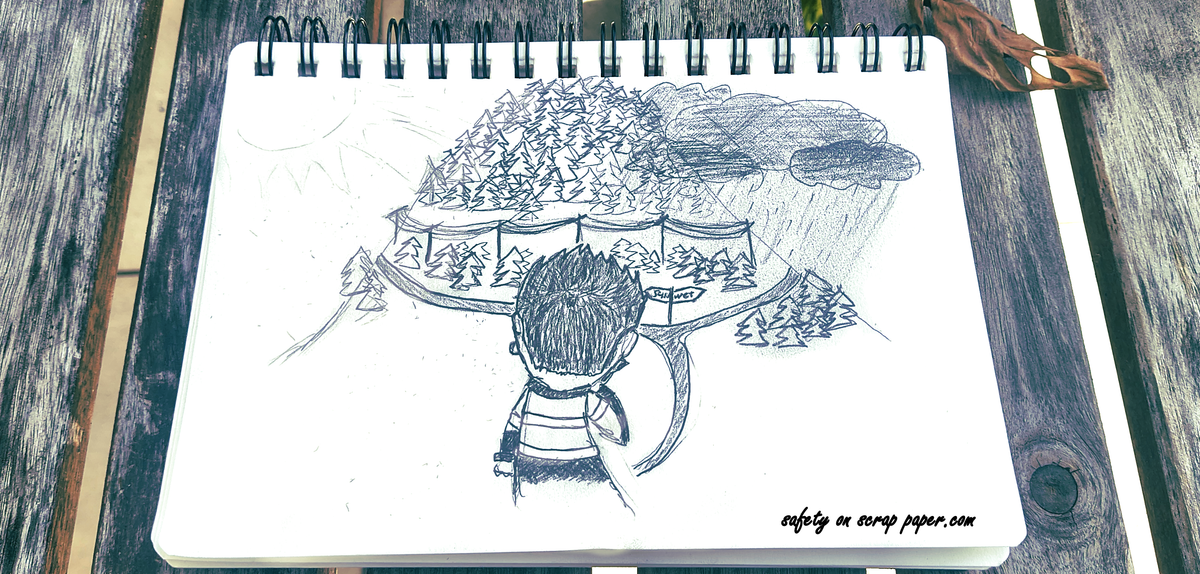
Just as I thought we were arriving on the first site of that day, the team surprised me the first time. We had been driving for an hour through forested mountains and arrived at the location in the navigation system. The team leader, however, sitting next to me, called the rest of the team in the other two cars and told them to keep driving. We hadn't even gotten out of the car. Trying to understand what was happening, I looked over to the team leader, who was already looking at the road again as he drove on. He must have noticed my confusion from the corners of his eyes, as he started smiling. He then told me, just as he had expected, as it had rained last night and the job site was wet. So instead of starting at this location, the team was going to a second job location first, which was on the other side of the mountain. He explained that if it rains one side of the mountain, the other side of the mountain stays dry. In the afternoon, we would return to the 'first' location, giving it time to dry.
Trying to better understand what he was adapting for, I asked the team leader whether the rain made the job more difficult. The team leader said, if it was needed they could still do the job wet. It wasn't as comfortable though. You get wet, the branches are heavier, the vegetation sticks more, you and the equipment get dirtier, equipment becomes harder to handle, you get tired quicker, you get cold, all things he'd rather do without.
Then the team surprised me again on the way back from the 'second' job location. The team leader told his team he was going to turn right, but that the rest of the team should go ahead. The team leader said he wanted to have a look at an upcoming job nearby. After a short look from the car, he called the planner to describe what he had seen and that the job would not take more than 2 hours to complete, but that they should take the right trailer with them. When I asked the team leader whether it was common to scope future jobs in between other jobs, he smiled again. He explained that he often did, but this was technically not a job yet. During a lunch break, the planners had mentioned there was a complaint from this place, and they had not put it into the system yet, as they did not know how to classify it.
While the team leader didn't use the S word, it was clear these things are relevant for Safety. The choice to swap job order meant work in better conditions, meaning better control over equipment, less fatigue, less cold, all things that reduce the chance of accidents and injury. The same with scoping without having to make a second trip. This reduces time on the road and improves information for upcoming jobs. These are not rare things. Almost any team that has the opportunity would do it.
It is, however, hard to capture this in terms of hazards and controls. The ability for the team to swap jobs around or scope future jobs opportunistically does not cover one specific hazard and, in turn, means it is not a control. These are ways the team stays in control, but neither are 'a control' you can point to.
In my experience, especially non-integrated safety teams struggle with even acknowledging such factors. The further a team or person is from the work, the more it becomes a case of if it does not fit in their documentation, it does not exist. It does not fit on the hierarchy of controls and can't be written on a risk register. In turn, it does not get considered in incident investigations. This does not mean no one has ever noticed it before or believes these things matter, but it makes it hard to make the case for it. If the documented system does not register it, a person first needs to raise it, which then comes with an extra burden of explaining context and specifics. Then if this messy reality inconveniences someone else's plans, they can defer to the official process based on official records, and poof... it's out of sight again.
None of this means that organisations can't manage or support either. A number of things helped the team adapt. The group had two jobs assigned for that day at different locations. This created options, and with more jobs assigned, there would have been more options. Then the team was able to recognise an improved order, because they knew the area and its weather patterns. The team had this knowledge, because they had dedicated areas they worked in. To adjust quickly, the team communicated by radio and phones. That the team was relatively stable, and had an assigned team leader, likely made coordination a lot smoother. The team and the planners had moments they could run into each other in a low-stakes setting, enabled by a shared lunch room, making it easier to share uncertain, messy information.
Some of these might not translate well to hard rules. It won't always be possible to assign multiple nearby jobs, and mandating shared lunches quickly becomes a bit draconian. However, an organisation can certainly facilitate and aim for these, and improve them. That might still make them poor candidates to list as 'controls', but does not mean they are less efficient or effective as conditions to strive for.
Being captured in the hazard and control language for risk management is not inevitable. I do not have a strong preference for what we call it, dynamic (non-)events, adaptive capacity, foresight, as long as we create space to acknowledge these efforts and opportunities to find better conditions, like the vegetation crew shuffling jobs around. We want to make that part of safety visible, so we can support it, or at least not accidentally destroy it.