When the informal beats the formal
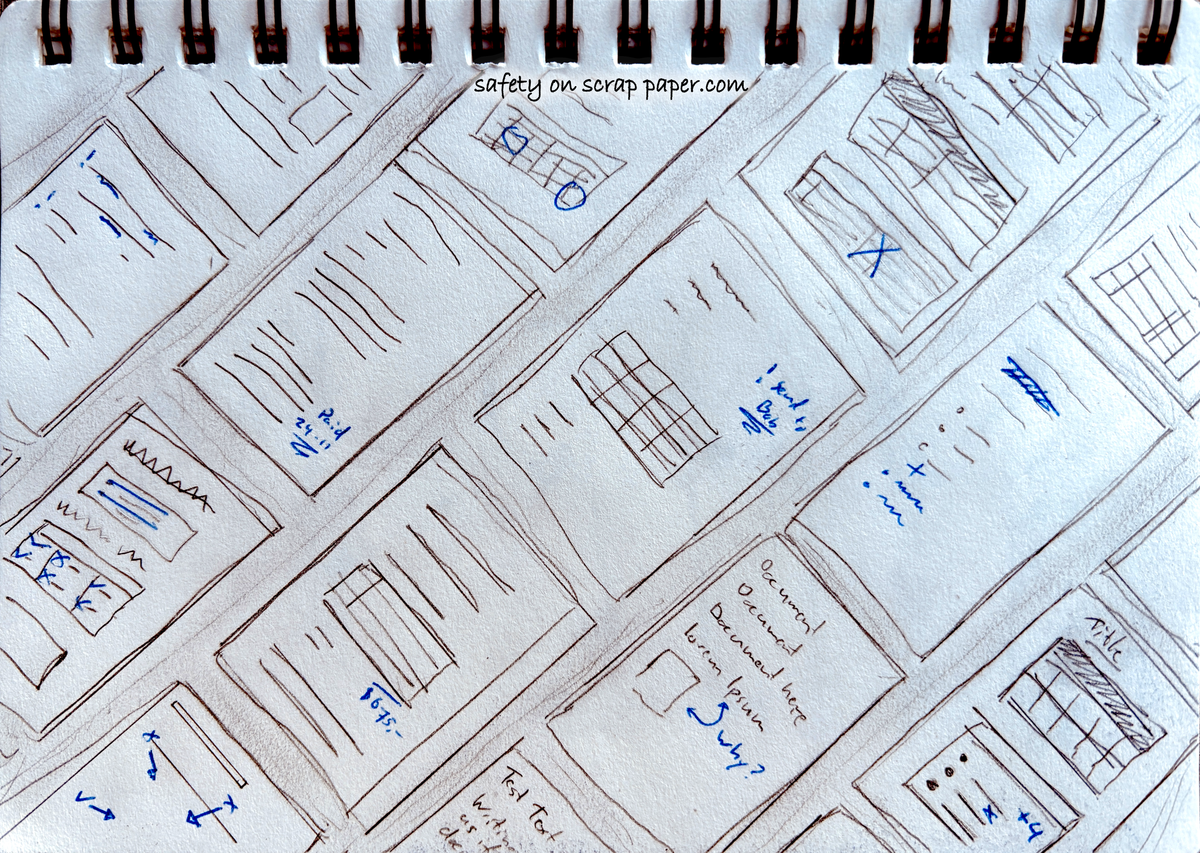
In fieldwork, I have often noticed how the 'informal' beats the formal. A blue-inked scribble making a bigger difference than a printed form. While this seems at odds with my previous post, that 'if it isn't documented, it doesn't exist', upon closer look, there is a difference.
Looking back, I already encountered this during my first ever field trip, which was with blast crews in mining. The day with the blast crew started in their office. Most were completing some errands and some younger members were looking at their phone. The shotfirer (a kind of team lead) was completing that day's JSA, which was going to be in a different area than that they had been working the day before. The JSA had a lot of the typical things in there, like the location of the job site, the date, team involved, details about the job, a list of hazards and controls, and a sketch of a traffic management plan.
The shotfirer took some time to complete the document, as he was completing the boxes he would sometimes stop to think about something. At one point, the shotfirer asked the rest of the team about some details of the upcoming job, which one of the more experienced team members answered.
However, after he printed the JSA, the team did not pay attention to what was in the document, they flipped through it, sometimes stopping at the last page with the traffic plan and then signing underneath. My guess at that point was that the team already knew this information, as it might have been discussed prior. That the team members had helped with providing some information, supported as much. The effort the shotfirer had put in was the effort it took to verbalise the answers precisely enough, and write it down.
That this wasn't the full story, however, became clear on that job. As the blast crew started working, the JSA was left underneath the windscreen wiper of the car. This practice made it easy for people to find. After a couple of hours a team manager arrived at the location. He had only just arrived at the mine that day for his rotation. The first thing he did was go over to the JSA under the windscreen wiper, unfold it, and sign it. Again, there wasn't much reading involved. This manager was less aware of the details of the job, as he had just arrived at the mine, yet went through the document as quickly as the rest of the team.
The simplest explanation at this point was that the team and the manager just did not care for the information. The next day, however, this was shown to be a bit more nuanced. As the day before, the shotfirer opened the JSA on the computer, this time to change it, but then sighed, looked at the old JSA and photocopied it instead. Then, with a blue pen, he scribbled two extra items on the JSA, one of those being a change in process, the second being that I was on site, and handed the JSA to his team. To me, this looked like a corruption of the JSA process. The shotfirer had not taken the time to think through the job again, with those changes. This was a shortcut. He just created something that looked like he had done the thinking.
All the team members, like the day before, at first just flipped mindlessly through the JSA. However, their eyes lingered on the blue ink before they went on to sign. The same thing happened with the team manager. Coming from a meeting with other teams at the mine, he joined the blast crew halfway through the morning, and again went to the JSA under the windscreen wiper of the car. Again, he flicked through it at a speed too fast to read anything, but stopped and placed his finger beneath the blue scribbles, pausing a moment and then looking across the bench, back at the JSA, and then signed it.
Both the blast crew and manager spent more time on reading the JSA, while they were more familiar with the job and location. It was the second day for this job. There was no change in what they set out to look for when they opened the document. The change was in what they saw. The blue ink out of line with printed text, breaking with the structure of the document. It immediately highlighted something out of the ordinary. And it highlighted someone had taken the effort to put it there. What I had seen as laziness and a corruption of the JSA, actually created extra attention for the parts people cared about.
At the time, I had just noticed the 'shortcut' worked well in practice. Over time, I started to see this as part of a general pattern: That informal marks importance. When something goes beyond, or breaks with, the formal structures or forms, it stands out. When someone goes out of their way to communicate something, like running up to someone during a coffee break, writing something in the margins or outside the pre-made boxes, it means that they thought it was important. They weren't prompted to write or say it. It was their judgement that without it, something wasn't enough. And others pick up on this. They recognise someone went out of their way. If someone ignores such efforts, or even tries to, others see this as akin to them not caring about the outcome, and them not being a team player.
I rely on this when I am trying to understand work. I am on the lookout for what looks informal. The little bit extra people put in, that is not a listed requirement, formal process, or established entry. It is one reason I am fascinated with scrap paper. The notes, scribbles, or interactions that break with the formal and designed process often tell you about the work that needs to be managed. It provides some insight into why work happens the way it does. If people could do the work just as well without it, they would.
Informal actions are usually there because the person who did them learned through experience that it matters. Not because someone far away dictated them. Informal practices are done because they are seen to work, they won't persist when they stop working. Formal processes often stick around, even when it is clear to those involved that they are not working. And the needs informal practice meet are unaddressed, or at least under-addressed, in the organisation, while formal activities, by definition, are acknowledged by the organisation.
This is at odds with my last post. In my last post, I said 'if it does not fit in ... documentation, it does not exist'. This week I am saying scribbles breaking the mould of documentation, make a difference, by standing out. The difference, I believe, is in what time frame and groups are involved.
In the short term and within cohesive teams, the informal wins out. Among people who have strong relations or shared goals, other people's concerns and signals of importance, become something that has to be responded to. Else you'll be letting each other, and yourself, down. Shared routines and known structures form a background on which deviations can stand out.
Over the longer term, and when work is coordinated across groups, the formal becomes more prominent. A lack of awareness of each other's context and goals, creates a different setting. With unfamiliar people and information, determining intent and legitimacy of claims becomes harder. Even when recognising something as important, how do you get others to act, if there's no script and you don't know who can do what? As the scale increases and knowledge of others and their context decreases, information that fits in the formal structure survives into the dashboard, databases, or other aggregation methods. Those can be called on again. The rest is lucky if it ever gets seen again.