On Moral Masturbation
Moral Masturbation - noun - The act of mistaking an ego-stroking fantasy for an intellectual contribution.
1. Can we stop the moral masturbation and get back to figuring this out?
There is a disturbing pattern in the safety profession I call Moral Masturbation. While it can pop up everywhere, it is at its most notable, and disturbing, with incident investigations. It unfolds in three phases.
Phase 1: Spotting a Moral Foil.
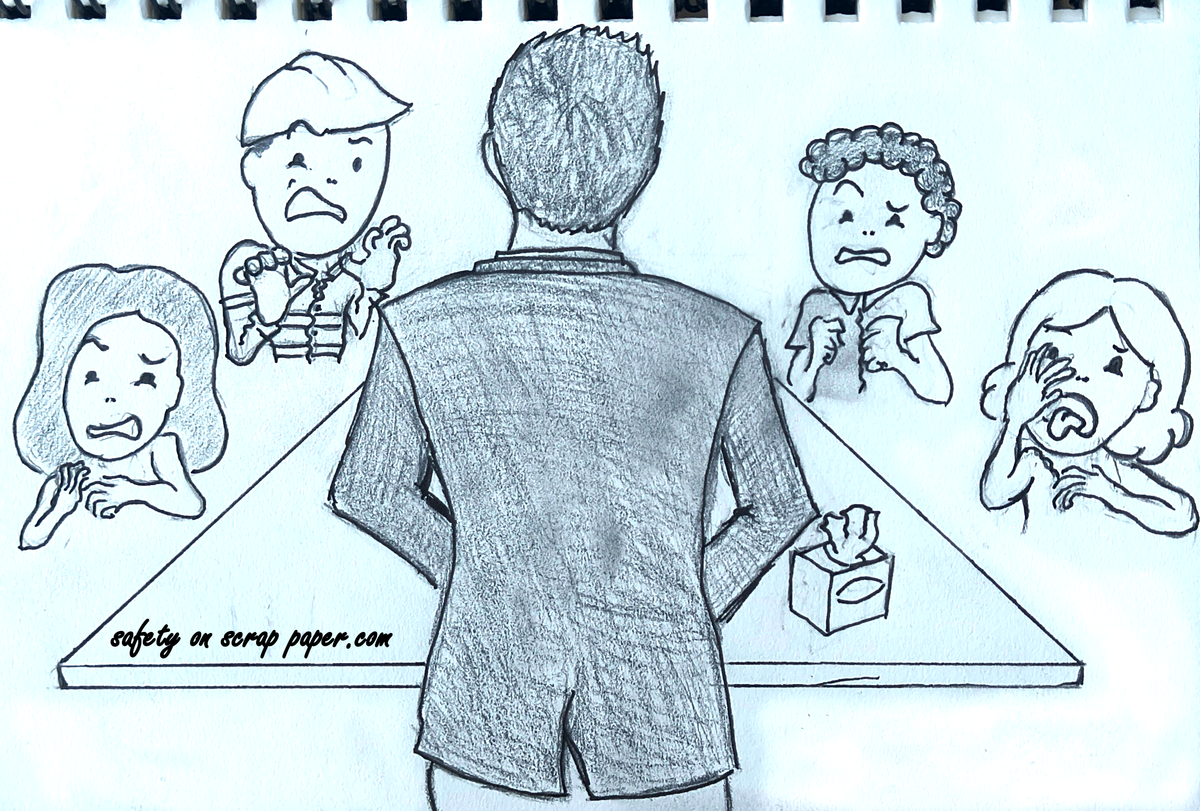
It starts after the first facts are known. When there is just enough to create a first story, a coherent-sounding timeline. As this story is shared, a listener spots a little deviation from the ideal of how work is done. The listener sees their chance. They pounce. They call it out. 'He messed up'. BOOM! Within seconds, they have found the single factor that explains this rambling story from the uh-ing and ah-ing investigators. If that deviation can be seen as the injured operator failing, then we can all go back to work again. The system was safe all along, there was just a lousy operator in it. Surprised by the sudden interruptus, the investigators pause. They are in explorative mode and their minds go through the uncertainties in the evidence, the questions they haven't explored, and other stories that could still be told. The fantasist doesn't have the burden of knowledge holding them back. They think they have just found the solution. That silence is just the investigators being impressed with their contribution.
Phase 2: Self-Indulgent Posturing
This is where it starts to get uncomfortable. The fantasist needs to show it wasn't just a mess-up, but also that the mess-up was avoidable, and they know they can fill that gap in their argument by fondling of their own ego. They flaunt their superiority with *"I always walked every site five times before starting any work"*. In one move, the fantasist parades themselves as the living proof that things can be different, and puffs themselves up as an authority. To top it off, the fantasist moves on to exhibit their ruggedness, boasting how they earned their stripes, by adding a tough mentor anecdote, like "When I was a rookie, I was told 'You don't get to touch anything and you just watch me'".
Colleagues, by now, are wondering what this person's upbringing has to do with last week's incident. But for the fantasist, it is crystal clear. The injured operator wasn't made of the 'right stuff'. Unlike them. The fantasist is as solid as they come. They are hard, and they know it. Harder than the injured person. A point they like to make to a room full of trapped, uncomfortable colleagues.
Phase 3: The Premature Conclusion
Where investigations should lead to a richer understanding, uncovering deeper, unexpected grooves of causality, and finding more opportunities to intervene, the fantasist stops cold. No curious probing. No taking in of the moment. No back-and-forth with reality. They grab the instant gratification of feeling superior... and stop there. They climax into I am good, they are bad.
This premature ending is not an accident. Even if a bystander overcomes the shock of the indecent ego exposure, and comments, the fantasist doubles down. There are bad people, there are broken rules, and you should stop looking. Even entertaining the idea that bad actions have drivers, or that enabling conditions could actually be addressed, is a no-no. That would require thinking, and thinking is the last thing they want to do right now.
Now, I am sure most of us have felt a warm flutter of vanity when listening to other people's mistakes. We have all been guilty of getting too excited by our ideas. I am certainly no saint myself, and I don't think it is a carnal sin or that it leads people to go blind. But mature professionals keep those ego impulses behind closed doors. It's awkward when someone strokes their ego in public, especially when everyone else is trying to figure out how someone got hurt.